
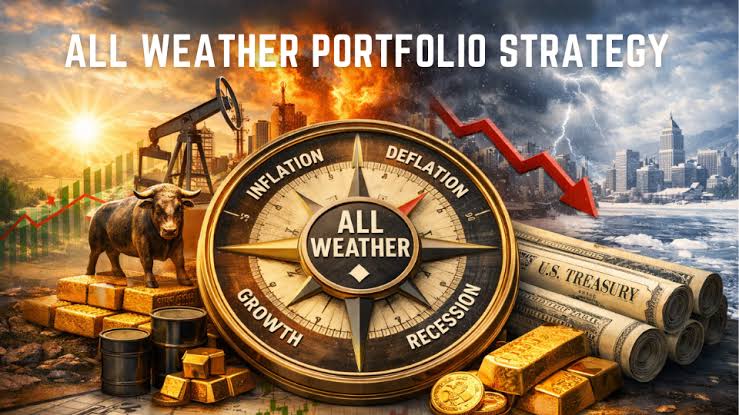
Economic uncertainty has always been part of investing. Markets rise and fall, inflation shifts purchasing power, interest rates change, and global events can quickly reshape financial conditions. While these developments often create concern, they also remind investors that resilience matters more than trying to predict every market movement. A well-constructed portfolio is designed to navigate both favourable and challenging environments without relying on perfect timing.
Long-term investors understand that uncertainty should not automatically lead to drastic decisions. Instead, periods of volatility provide an opportunity to review investment strategies, strengthen diversification, and ensure financial goals remain realistic. Rather than reacting emotionally to short-term headlines, successful investors focus on building portfolios that can adapt over time while remaining aligned with their personal objectives.
Understanding What Creates Portfolio Resilience
A resilient portfolio is not one that completely avoids losses. Instead, it is structured to recover from market downturns while continuing to pursue long-term growth. Financial professionals and respected institutions consistently emphasise that markets have historically experienced cycles of expansion and contraction, making preparation more valuable than prediction.
Diversification remains one of the most effective tools available to investors. Spreading investments across different asset classes, industries, and geographic regions reduces dependence on the performance of any single investment. When one area experiences weakness, another may help offset those declines, creating a more balanced overall portfolio.
Risk tolerance also plays an essential role in portfolio resilience. Investors often overestimate their comfort with market volatility during periods of growth, only to become uncomfortable when prices decline. Understanding personal financial goals, investment timelines, and emotional responses to market swings allows investors to choose an allocation they can maintain through changing conditions.
Balancing Growth and Stability
Economic uncertainty does not eliminate growth opportunities, but it does highlight the importance of balance. Growth-oriented assets such as equities have historically generated attractive long-term returns, while defensive investments can help reduce overall volatility during difficult market periods.
Fixed-income investments often become increasingly important when uncertainty rises. Bonds, government securities, and other income-producing assets may provide greater stability while generating predictable cash flow. Although their performance varies depending on interest rate environments, they often contribute valuable diversification within a broader investment strategy.
Maintaining cash reserves is another overlooked component of portfolio management. Investors who keep adequate emergency savings are less likely to sell long-term investments during temporary market declines. Having accessible liquidity provides flexibility, reduces financial stress, and supports better investment decisions when markets become unpredictable.
The Importance of Regular Portfolio Reviews
Building a resilient portfolio is not a one-time task. Economic conditions, personal circumstances, and financial goals naturally evolve, making periodic portfolio reviews an important part of successful investing.
Portfolio rebalancing helps maintain the intended level of risk. As certain investments outperform others, asset allocations can gradually drift away from original targets. Rebalancing restores the desired mix without requiring investors to make emotional decisions during periods of market volatility. Many experienced financial advisers recommend reviewing allocations on a regular schedule rather than reacting to daily market movements.
Investors seeking to deepen their understanding of long-term portfolio construction can click to read additional educational resources that explain diversification, asset allocation, and disciplined investing in greater detail. Expanding financial knowledge helps investors make more informed decisions while remaining focused on long-term objectives instead of short-term market noise.
Managing Emotions During Market Volatility
Investor psychology often has a greater impact on long-term returns than market performance itself. Fear during downturns and overconfidence during strong markets can both lead to costly investment mistakes. Behavioural finance research continues to demonstrate that emotional decision-making frequently reduces long-term investment success.
One effective way to manage emotions is by following a written investment plan. Clearly defining financial goals, target allocations, contribution schedules, and acceptable levels of risk creates a framework for decision-making even when markets become volatile. This structured approach encourages consistency instead of impulsive reactions.
Regular investing through changing market conditions can also help reduce the pressure of trying to identify perfect entry points. Contributing consistently allows investors to purchase investments at varying prices over time, potentially smoothing the impact of market fluctuations while reinforcing long-term discipline.
Looking Beyond Short-Term Economic Headlines
Economic headlines naturally attract attention, but they rarely provide a complete picture of long-term investment opportunities. Inflation reports, employment figures, central bank announcements, and geopolitical events can influence markets in the short term, yet history shows that economies and financial markets continually evolve.
Investors benefit from focusing on long-term economic fundamentals rather than attempting to react to every news cycle. Innovation, business expansion, productivity improvements, and global economic development have historically supported wealth creation despite numerous periods of uncertainty. Keeping this broader perspective encourages patience during temporary setbacks.
Conclusion
Economic uncertainty will always remain a natural part of investing, but uncertainty does not have to become an obstacle to long-term financial success. Investors who prioritise diversification, maintain balanced asset allocations, review portfolios regularly, and stay committed to clearly defined goals are often better positioned to navigate changing market conditions with confidence.
Building a resilient portfolio is ultimately about preparation rather than prediction. By focusing on sound investment principles, managing emotional responses, and maintaining a long-term perspective, investors can create portfolios that are better equipped to withstand economic uncertainty while continuing to support meaningful financial goals for years to come.